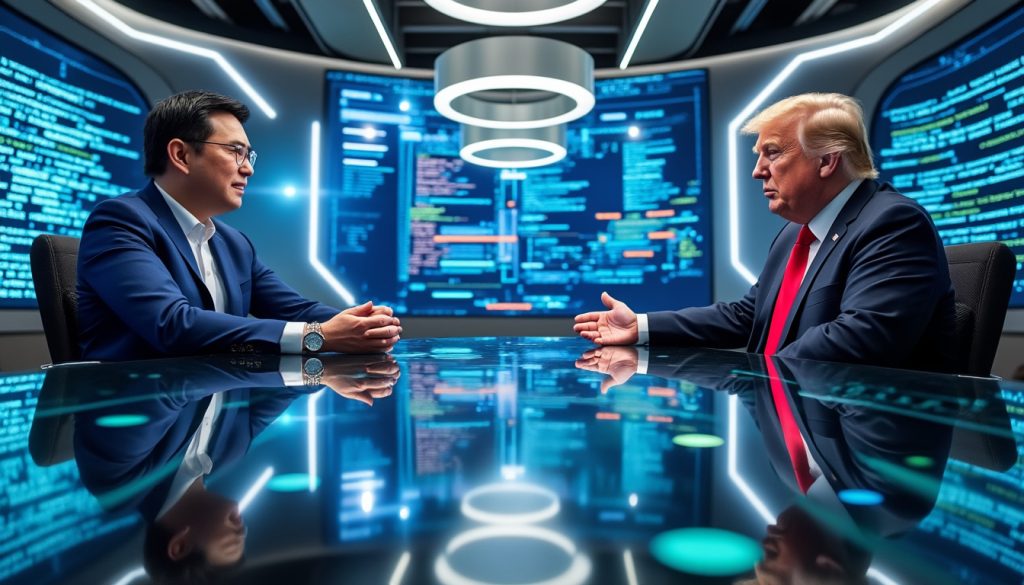
The meeting between Jensen Huang, CEO of NVIDIA, and President Trump has generated considerable discussion within the tech industry. This significant encounter not only underscores the relationship between technology and government but also highlights how certain conversations can shape the future of innovation, particularly in artificial intelligence. With a focus on enhancing U.S. leadership in technology, the discussions ranged from semiconductor policies to competitive advantages in AI development. Analyzing the outcomes and implications of this meeting offers insights into the evolving dynamics between major tech players and policymakers.
As technology continues to advance rapidly, understanding the dialogue between major industry leaders like Huang and political figures such as Trump becomes crucial. The challenges posed by global competitors, notably China, influence U.S. strategies in technology innovation and economic growth. This article delves into the key insights gained from the Jensen Huang-Trump meeting, examining its impact on NVIDIA’s strategy within the broader context of the tech industry and artificial intelligence.
Understanding the Importance of Technology Leadership
During the meeting, discussions inherently focused on the need for the U.S. to maintain its leadership in technology, particularly in the realm of artificial intelligence. With emerging competitors, the urgency to bolster semiconductor policies was paramount. Huang emphasized the pivotal role that semiconductors play in driving AI advancements, making it clear that U.S. technology needs to visibly outperform global counterparts.
Semiconductors: The Backbone of AI Innovation
Semiconductors are essential for the development and deployment of AI technologies. NVIDIA, under Huang’s leadership, has been at the forefront of this revolution, producing advanced graphics processing units (GPUs) that are critical for training machine learning models. The meeting highlighted the vital connection between governmental directive and technological advancement, proposing a cooperative framework to advance U.S. capabilities in AI.
The implications of such discussions reflect on the need for increased funding for research and development in the semiconductor sector. Furthermore, establishing strong policies that encourage innovation while safeguarding national interests is crucial. As Huang and Trump discussed the need for a unified approach, mechanisms to protect American innovation from global market fluctuations were outlined.
Global Competition: The Challenge from China
The meeting also addressed the growing concern of competition from Chinese companies, particularly regarding AI technologies. The emergence of firms like DeepSeek, which have claimed substantial progress at lower costs, is an indication that the U.S. must intensify its efforts in maintaining a technological edge. Huang’s insights on navigating these competitive waters became a focal point as he outlined strategies to enhance NVIDIA’s offerings and reinforce U.S. dominance in the tech industry.
NVIDIA’s Strategy: Innovations and Future Directions
Following the meeting, NVIDIA’s approach towards future innovations will be more critical than ever. Huang is known for his forward-thinking strategies, and the insights gained from the discussion with Trump will likely shape the company’s roadmap. Innovations within the realm of AI and semiconductors are not merely business imperatives; they represent a national economic strategy as well.
Ramping Up AI Development Initiatives
One of the significant outcomes from the discussions was a renewed commitment to accelerate AI development initiatives. This will involve not only enhancing existing technologies but also exploring new avenues within the AI sector. Human resources, partnerships with educational institutions, and strategic collaborations with other tech companies are components of a multifaceted strategy that NVIDIA may adopt in light of the meeting.
Furthermore, the collaborative approach that Huang discussed with Trump could foster an environment conducive to rapid innovation. Exploring different market segments and consumer needs in the AI domain can enhance the product offerings of NVIDIA, thus solidifying its foothold in the sector.
Policy Influence and Legislative Frameworks
The discussions between Huang and Trump also pointed towards an understanding of the need for supportive legislative frameworks. Creating an environment that incentivizes manufacturers and tech developers to innovate lies at the crux of building a robust AI ecosystem. The possible enactment of favorable policies may pave the way for more funding opportunities and research grants tailored for tech innovation.
The Broader Implications: Shaping the Future of AI
The insights derived from the Jensen Huang-Trump meeting extend beyond NVIDIA, influencing the broader landscape of artificial intelligence development in the U.S. The discussions contributed towards shaping a narrative that emphasizes the importance of a strong technological foundation for national security and economic prosperity. Understanding the intersection of technology and policy emerges as crucial in navigating the evolving global market norms.
Innovative Collaboration Across the Tech Industry
A key takeaway from the meeting is the necessity for collaboration among tech industry leaders. As competition heightens, pooling resources, sharing knowledge, and collaborating on regulatory frameworks may enhance the overall efficiency of AI advancements. Huang’s insights emphasize the need for an interconnected approach that values partnerships among leading tech firms.
This collaborative spirit will not only foster innovation but also enhance the U.S.’s competitive edge over international competitors. By aligning technology initiatives with government support, the path to progressive AI technologies becomes clearer. The need for inter-industry dialogue is now more critical than ever in shaping future regulations and funding opportunities for tech innovation.
Anticipating Future Trends in AI
The discussions surrounding AI during the Huang-Trump meeting have sparked interest in anticipating future trends within the industry. With technological advancements progressing at a rapid pace, foresight into what the coming years may hold is imperative for both policy and industry players. Huang’s emphasis on innovation suggests that AI applications will continue to evolve, driving greater demand for GPUs and semiconductors.
Final Thoughts on the Huang-Trump Meeting
The meeting with President Trump has presented Jensen Huang with invaluable insights that will undoubtedly shape NVIDIA’s trajectory in the tech landscape. The relationship established in these discussions signals an era where the tech industry must navigate through both competitive and collaborative landscapes. The dual challenge of innovation and regulation will characterize the path forward.
Ultimately, the outcomes from this high-profile meeting provide a framework for understanding the ongoing evolution of artificial intelligence and its implications on national policy. The lessons learned reflect an urgency to push for technological advancement while safeguarding national interests, ensuring a stable, innovative environment for the future.


